Ukraine war briefing: Hungary agrees to allow EU loan to Kyiv but will not contribute
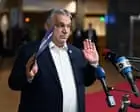
Viktor Orbán appeared to have agreed not to block the borrowing as long as his country, Slovakia and the Czech Republic were excluded from the guarantees. What we know on day 1,395
Hungary’s Viktor Orbán has agreed not to block a massive EU-backed interest-free loan to Ukraine to meet its military and economic needs for the next two years , as long as his country, Slovakia and the Czech Republic were excluded from the guarantees for the debt. After failing to agree on using frozen Russian assets, diplomats announced the new loan in the early hours of Friday. The deal will not affect the financial obligations of Hungary, Slovakia and the Czech Republic, which did not want to contribute to the financing of Ukraine, the text said. Moscow-friendly Hungary had previously said it would oppose the deal, just as it opposed the use of Russian assets.
German chancellor Friedrich Merz said Ukraine would have to repay the loan only if Russia paid reparations for its war , and that the EU reserved the right to use Russian assets immobilised in the EU for repayment if Russia failed to pay compensation. Merz had pushed hard for the frozen asset plan – but still said the final decision on the loan “sends a clear signal” to Russian president Vladimir Putin.
The move follows hours of discussions among leaders on the technical details of a loan based on the frozen Russian assets, which turned out to be too complex or politically demanding to sort out at this stage , diplomats said. “We have gone from saving Ukraine to saving face, at least that of those who have been pushing for the use of the frozen assets,” one EU diplomat said. The main difficulty in the use of the Russian money was providing Belgium, where €185bn ($217bn) of the total €210bn of Russian assets in Europe are held, with sufficient guarantees against financial and legal risks from potential Russian retaliation for the release of the money to Ukraine.
Donald Trump has urged Ukraine to move “quickly” on a deal to end Russia’s invasion ahead of fresh talks expected in Miami at the weekend . The US president told reporters in the Oval Office on Thursday on a potential settlement: “Well, they’re getting close to something, but I hope Ukraine moves quickly. I hope Ukraine moves quickly because Russia is there. And you know, every time they take too much time, then Russia changes their mind.” Trump envoys Steve Witkoff and Jared Kushner plan to meet Russian officials in Florida for the talks, a White House official said, after the envoys met a Ukrainian delegation in Berlin last Sunday and Monday.
The Danish government has accused Russia of being behind two “destructive and disruptive” cyber-attacks in what it describes as “very clear evidence” of a hybrid war, reports Miranda Bryant.The Danish Defence Intelligence Service (DDIS) announced on Thursday that Moscow was behind a cyber-attack on a Danish water utility in 2024 and a series of distributed denial-of-service attacks on Danish websites in the lead-up to municipal and regional council elections in November. A DDIS statement cited Russia’s “hybrid war against the west” and said: “The aim is to create insecurity in the targeted countries and to punish those that support Ukraine.”
Russian strikes near Ukraine’s Black Sea port of Odesa on Thursday killed a woman in her car and hit infrastructure and the regional governor asked residents suffering long power cuts to stop blocking roads in protest. Oleh Kiper said on Telegram that a Russian drone killed a woman crossing a bridge in her car south-west of Odesa. Her three children were injured. Kiper asked residents whose homes had been hit by extended power outages to exhibit patience and end roadblocks.
Britain has imposed sanctions on more Russian oil companies and Canadian-Pakistani billionaire Murtaza Lakhani as part of efforts to increase pressure on Moscow over the Ukraine war. The government on Thursday targeted 24 individuals and entities, including what it described as Russia’s largest remaining unsanctioned oil companies: Tatneft, Russneft, NNK-Oil and Rusneftegaz. Earlier in the day the EU imposed sanctions on 41 more ships in Russia’s so-called shadow fleet that seeks to circumvent western trading restrictions.
Continue reading...Latest news



 more news