December 18 live war map: Kupiansk trap for Putin
global.espreso.tv
Thu, 18 Dec 2025 11:25:00 +0200

Meanwhile, the successful actions of the Ukrainian Armed Forces that took place in October and November, only now receiving detailed public coverage, are not just about victory on the battlefield, but primarily about restoring faith that Ukrainian forces can successfully counterattack and liberate Ukrainian cities. And Kupiansk—we are liberating it for the second time.It's worth recalling that after the successful counteroffensive in 2022, Russian troops were so weakened that for two years they didn't even plan to conduct operations on this section of the front involving crossing the Oskil River and advancing on Kupiansk. Only a year ago, in October and November, Russian forces achieved a breakthrough to Holubivka and reached the approaches to Zaosillia—the district of Kupiansk on the left bank. 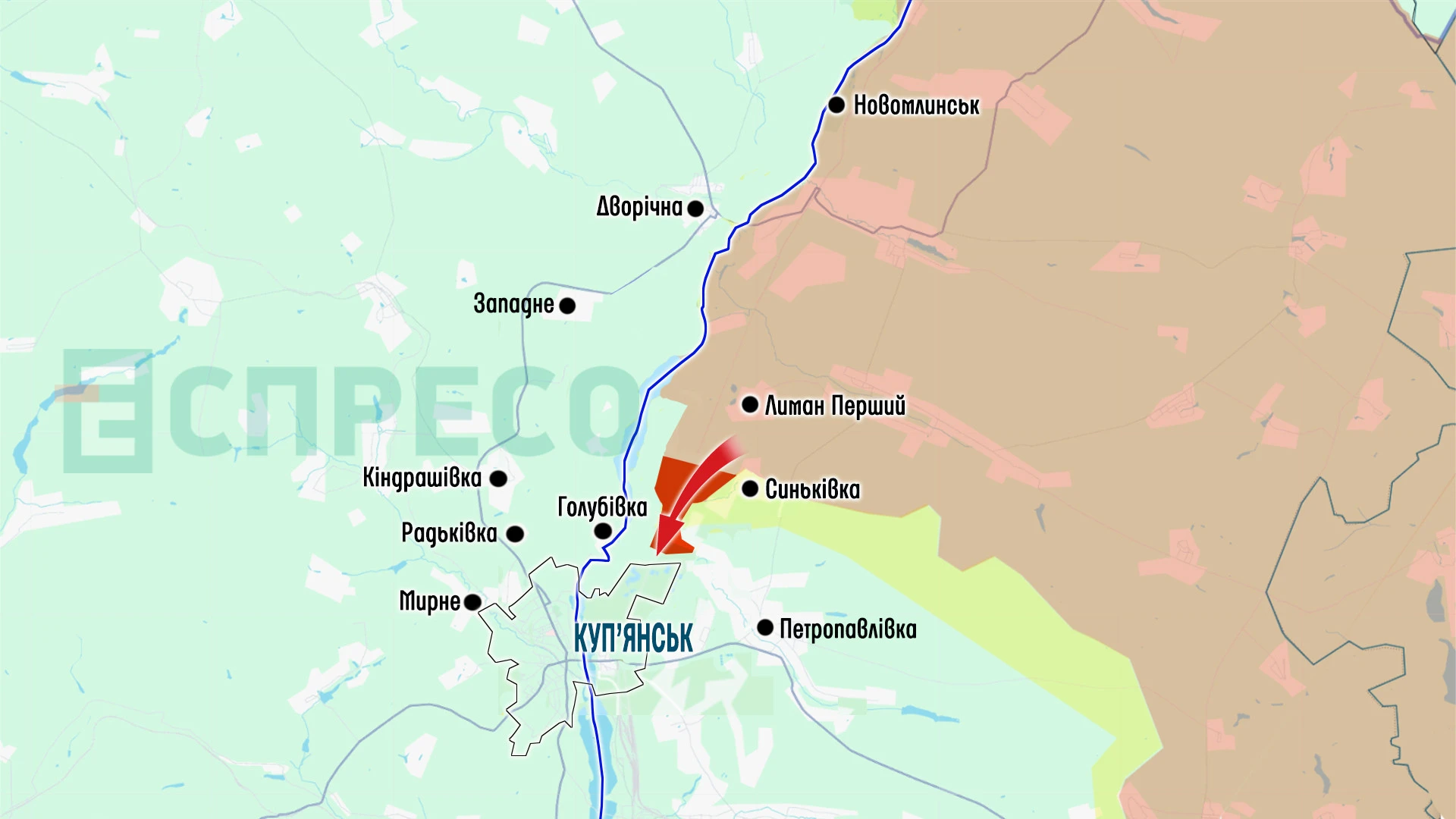 And although the breakthrough on the city's outskirts was quickly eliminated, from that time on, Russian forces relentlessly tried to reach the city, which serves as the gateway to an advance into the Kharkiv region along a broad front.Russian forces spent the first half of 2025 creating a bridgehead on the right bank of the Oskil, north of Kupiansk. Along a 33 km stretch from the border to Kupiansk, the Russian army captured several zones of control.
 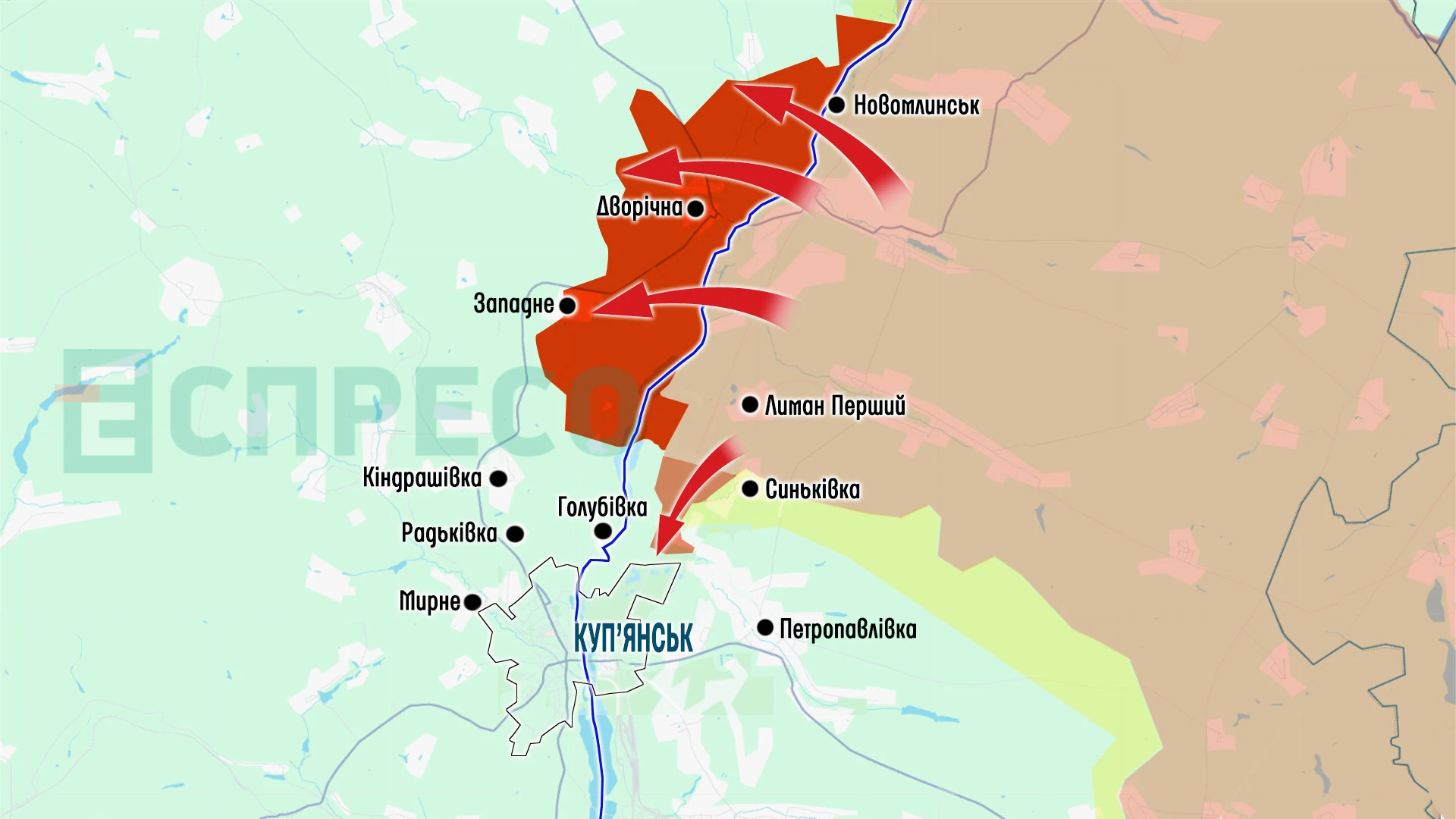 The largest advance was in the area of Dvorichna. Here they occupied a number of villages and pushed 5 km west from the river. And although throughout the entire six months Ukrainian forces prevented Russian troops from transporting armored vehicles to the right bank, this bridgehead was enough to launch a full-scale offensive campaign on Kupiansk from there in June.Over three summer months, Russian forces significantly built up their grouping for the offensive and occupied territory north of Kupiansk. Here they attacked in two columns. One moved through Holubivka along the river and stormed the densely built-up northern districts of the city. The other captured Radkivka and Kindrashivka and advanced toward the villages of Myrne and Sobolivka, bypassing Kupiansk from the flank.It's worth noting that Russian forces conducted this operation to accumulate forces for an attempt at a second occupation of Kupiansk using a system of underground gas pipelines. This allowed them to avoid crossing the Oskil, over which they were never able to establish a reliable crossing, as Ukrainian forces suppressed any attempts.
 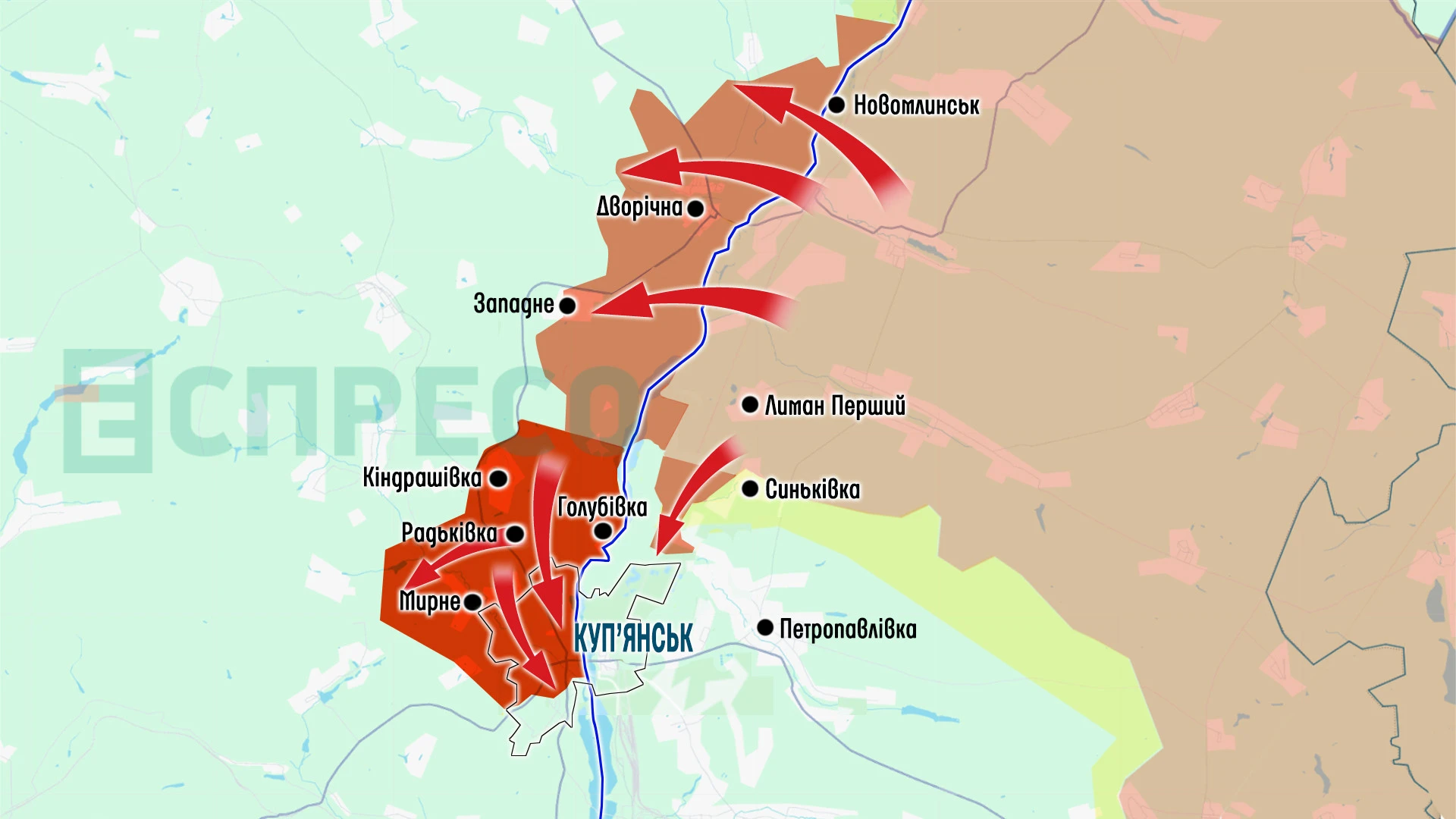 The route through the 5 km-long pipeline, taking 4 days, was quite difficult—it began on the left bank in Lyman Pershyi and ended near Radkivka, from where Russian troops moved into a forested area where they accumulated forces for the strike. This was the only way to penetrate the city, as the offensive on the left bank of the Oskil has been in a strategic dead end for many years.In September-October, after 9 months of preparation, the assault on Kupiansk began. More than a thousand Russian soldiers penetrated the city and quite quickly infiltrated the central and western quarters. In fact, except for the southern part, the entire city was swarming with the Russian military. The Zaosillia district also held the line. All attempts by Russian forces to cross the river in the opposite direction and establish themselves on the left bank failed. Russian military command, getting ahead of events, reported to Putin about victory and the capture of Kupiansk. On November 20, wanting to strengthen his negotiating position, Putin announced full control over the city and even invited journalists there. But no one came, because at that time a successful campaign by Ukrainian Defense Forces to liberate Kupiansk had already been underway for a month.
 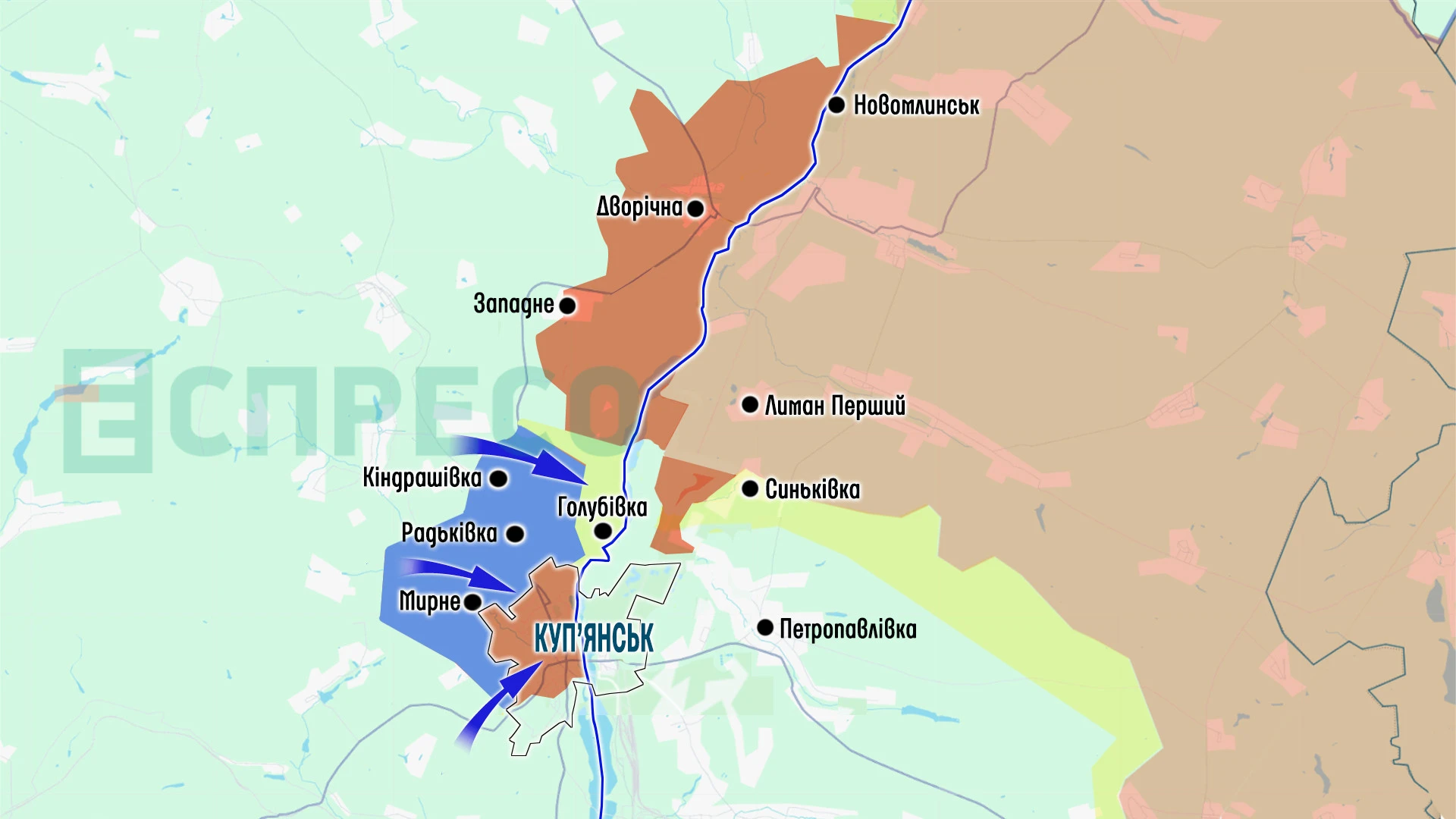 They forgot to report to Putin that as of early November, Ukrainian forces had launched a counteroffensive on the northern outskirts of the city and liberated Myrne, Radkivka, and Kindrashivka, and also brought Holubivka under fire control. Thus, reaching the Oskil, Ukrainian troops cut off Russian logistics to the city. They took control of the pipeline exit, and later destroyed the pipeline itself, using 3 tons of explosives for this purpose.So, due to the generals' lies, when Putin called for journalists, his troops in Kupiansk were already encircled. High-ranking generals' shoulder boards will definitely fly for this.After cutting off the hydra's head, Ukrainian Defense Forces began clearing the city piece by piece, block by block. While part of the groupings advanced from the west to the north of the city, others attacked from the south to prevent even greater spread of Russian forces throughout Kupiansk.
 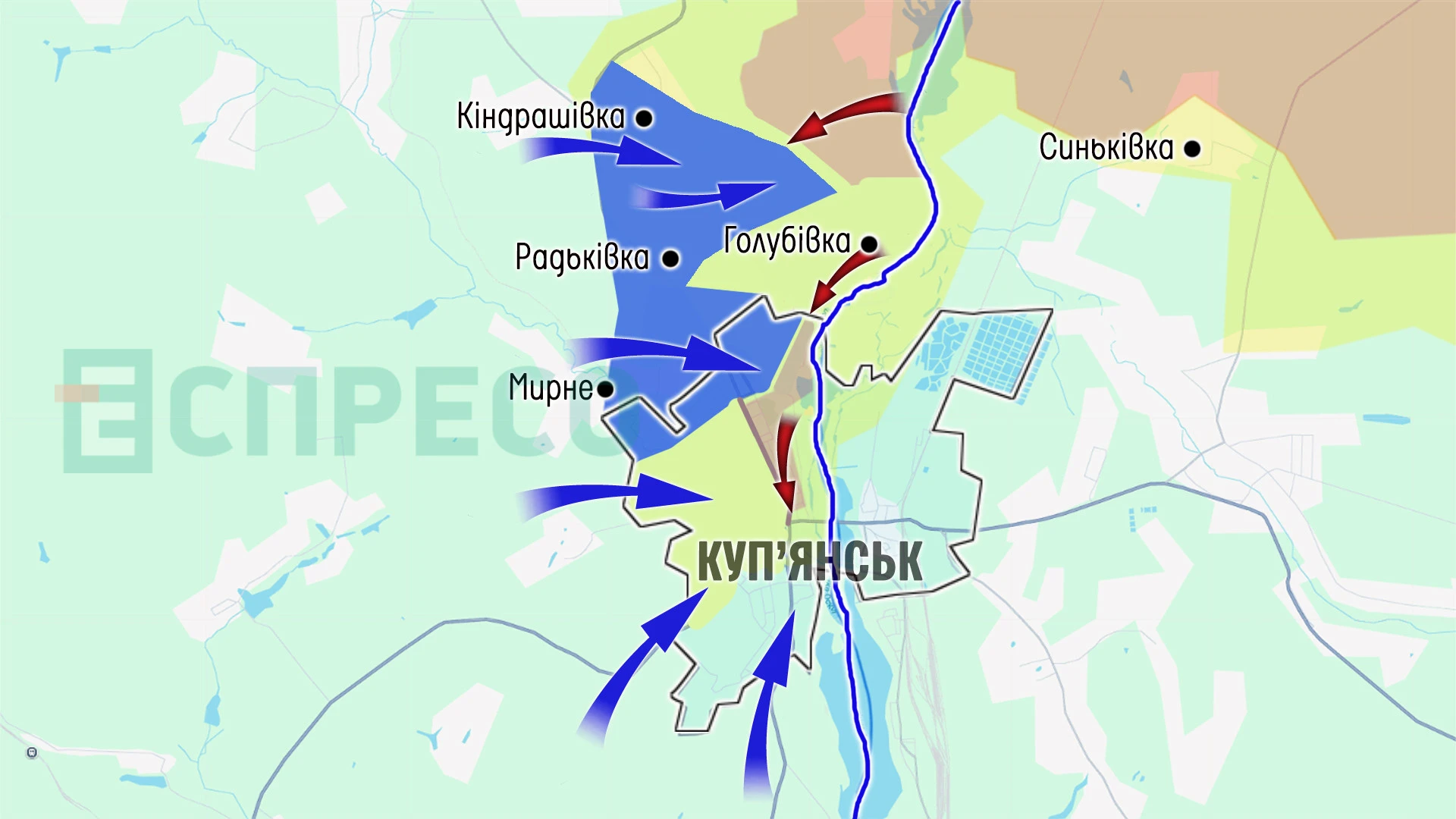 To liberate the city, Ukrainian forces specially created a unique search-and-strike grouping Khartia, which included, in addition to the Khartia Brigade itself, units of the 92nd Assault Brigade, the 425th Assault Regiment Skelia, fighters from the Rapid Operational Response Unit, Ukraine’s Security Service, Military Police, Special Operations Forces, as well as former territorial defense, now mechanized brigades 125, 127, 116. We hope we haven't forgotten anyone.Despite such a significant list of units, numerically they were in the minority. After all, about one and a half thousand Russians infiltrated Kupiansk and holed up in buildings. Clearing each building is a lengthy process that can take from half a day to a week.Thanks to gradual but fairly rapid advancement by Ukrainian forces in the north and west of the city, it was possible to eliminate over a thousand Russian troops. And these are only verified losses. More than two hundred are still holed up in the central districts, occupying many key buildings. Including the central city hospital, automotive and medical colleges, kindergartens, and high-rise buildings.
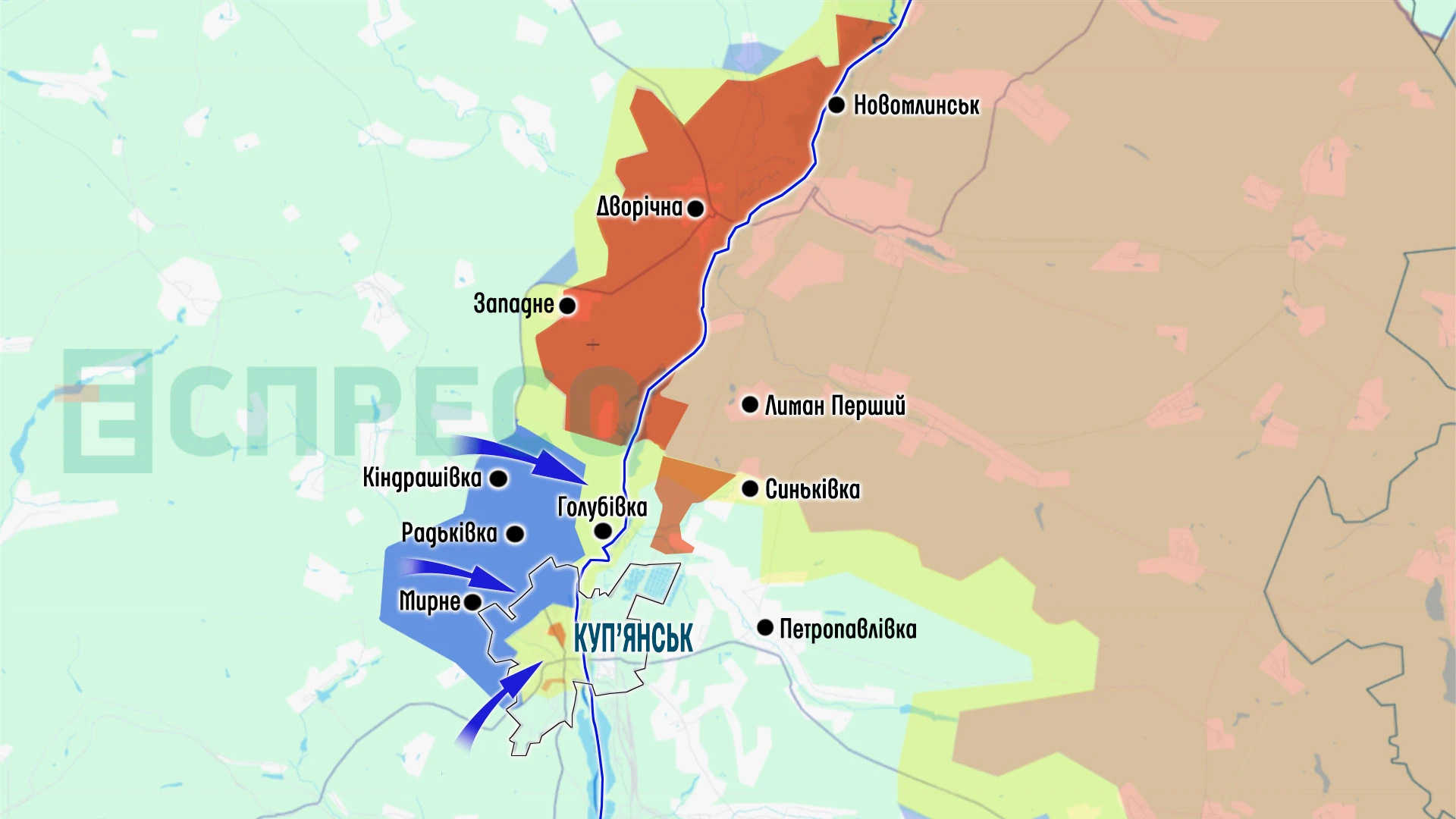 Currently, Russian troops are making constant attempts to break through from the north to the city, but they are not succeeding, as the forces deployed in the bridgehead area near Dvorichna are clearly insufficient. And accumulating new forces will take months.During the operation, Ukrainian forces demonstrated that they have mastered new tactics that allow relatively small forces to quickly break through the "kill zone," despite the enemy's greater numbers of personnel and drones. Thus, the quality of troops, their motivation, and competent tactics can become a new game-changer that will stop the mass penetration of Russian forces into Ukrainian cities. After all, while the operation to liberate Kupiansk is ongoing, Russian forces are penetrating Kostiantynivka, Lyman, Huliaipole; defensive battles continue in Pokrovsk, Myrnohrad, Vovchansk, and Siversk. These battlefields will become testing grounds for Ukrainian forces' new tactics. Some of the brigades that participated in the Kupiansk operation are already being redeployed to new sections of the front.It's worth noting that the offensives by Russian troops conducted along the entire border of the Kharkiv region, particularly in Vovchansk, Mylove, and Odradne, will most likely be gradually curtailed, since they did not achieve their main goal—they did not divert Ukrainian reserves from saving Kupiansk. So now, in a several-month perspective, they have no logical continuation.The Kupiansk operation gave Ukraine a strategic advantage over Putin's Russia. After all, in addition to military achievement, this campaign is a powerful informational weapon that demonstrates to Ukrainians and to our American and European partners that the course of this war is not predetermined. Ukraine is not doomed to defeat, as Putin constantly says and tries to convince Trump. Ukraine still has enough trump cards to defeat Russians on the battlefield.The maps were created based on information received from the Ukrainian Armed Forces’ General Staff, as well as from other open and verified sources. At the same time, the maps are not maximally accurate and only conditionally reflect trends in the combat zone.
And although the breakthrough on the city's outskirts was quickly eliminated, from that time on, Russian forces relentlessly tried to reach the city, which serves as the gateway to an advance into the Kharkiv region along a broad front.Russian forces spent the first half of 2025 creating a bridgehead on the right bank of the Oskil, north of Kupiansk. Along a 33 km stretch from the border to Kupiansk, the Russian army captured several zones of control. The largest advance was in the area of Dvorichna. Here they occupied a number of villages and pushed 5 km west from the river. And although throughout the entire six months Ukrainian forces prevented Russian troops from transporting armored vehicles to the right bank, this bridgehead was enough to launch a full-scale offensive campaign on Kupiansk from there in June.Over three summer months, Russian forces significantly built up their grouping for the offensive and occupied territory north of Kupiansk. Here they attacked in two columns. One moved through Holubivka along the river and stormed the densely built-up northern districts of the city. The other captured Radkivka and Kindrashivka and advanced toward the villages of Myrne and Sobolivka, bypassing Kupiansk from the flank.It's worth noting that Russian forces conducted this operation to accumulate forces for an attempt at a second occupation of Kupiansk using a system of underground gas pipelines. This allowed them to avoid crossing the Oskil, over which they were never able to establish a reliable crossing, as Ukrainian forces suppressed any attempts. The route through the 5 km-long pipeline, taking 4 days, was quite difficult—it began on the left bank in Lyman Pershyi and ended near Radkivka, from where Russian troops moved into a forested area where they accumulated forces for the strike. This was the only way to penetrate the city, as the offensive on the left bank of the Oskil has been in a strategic dead end for many years.In September-October, after 9 months of preparation, the assault on Kupiansk began. More than a thousand Russian soldiers penetrated the city and quite quickly infiltrated the central and western quarters. In fact, except for the southern part, the entire city was swarming with the Russian military. The Zaosillia district also held the line. All attempts by Russian forces to cross the river in the opposite direction and establish themselves on the left bank failed. Russian military command, getting ahead of events, reported to Putin about victory and the capture of Kupiansk. On November 20, wanting to strengthen his negotiating position, Putin announced full control over the city and even invited journalists there. But no one came, because at that time a successful campaign by Ukrainian Defense Forces to liberate Kupiansk had already been underway for a month. They forgot to report to Putin that as of early November, Ukrainian forces had launched a counteroffensive on the northern outskirts of the city and liberated Myrne, Radkivka, and Kindrashivka, and also brought Holubivka under fire control. Thus, reaching the Oskil, Ukrainian troops cut off Russian logistics to the city. They took control of the pipeline exit, and later destroyed the pipeline itself, using 3 tons of explosives for this purpose.So, due to the generals' lies, when Putin called for journalists, his troops in Kupiansk were already encircled. High-ranking generals' shoulder boards will definitely fly for this.After cutting off the hydra's head, Ukrainian Defense Forces began clearing the city piece by piece, block by block. While part of the groupings advanced from the west to the north of the city, others attacked from the south to prevent even greater spread of Russian forces throughout Kupiansk. To liberate the city, Ukrainian forces specially created a unique search-and-strike grouping Khartia, which included, in addition to the Khartia Brigade itself, units of the 92nd Assault Brigade, the 425th Assault Regiment Skelia, fighters from the Rapid Operational Response Unit, Ukraine’s Security Service, Military Police, Special Operations Forces, as well as former territorial defense, now mechanized brigades 125, 127, 116. We hope we haven't forgotten anyone.Despite such a significant list of units, numerically they were in the minority. After all, about one and a half thousand Russians infiltrated Kupiansk and holed up in buildings. Clearing each building is a lengthy process that can take from half a day to a week.Thanks to gradual but fairly rapid advancement by Ukrainian forces in the north and west of the city, it was possible to eliminate over a thousand Russian troops. And these are only verified losses. More than two hundred are still holed up in the central districts, occupying many key buildings. Including the central city hospital, automotive and medical colleges, kindergartens, and high-rise buildings.Currently, Russian troops are making constant attempts to break through from the north to the city, but they are not succeeding, as the forces deployed in the bridgehead area near Dvorichna are clearly insufficient. And accumulating new forces will take months.During the operation, Ukrainian forces demonstrated that they have mastered new tactics that allow relatively small forces to quickly break through the "kill zone," despite the enemy's greater numbers of personnel and drones. Thus, the quality of troops, their motivation, and competent tactics can become a new game-changer that will stop the mass penetration of Russian forces into Ukrainian cities. After all, while the operation to liberate Kupiansk is ongoing, Russian forces are penetrating Kostiantynivka, Lyman, Huliaipole; defensive battles continue in Pokrovsk, Myrnohrad, Vovchansk, and Siversk. These battlefields will become testing grounds for Ukrainian forces' new tactics. Some of the brigades that participated in the Kupiansk operation are already being redeployed to new sections of the front.It's worth noting that the offensives by Russian troops conducted along the entire border of the Kharkiv region, particularly in Vovchansk, Mylove, and Odradne, will most likely be gradually curtailed, since they did not achieve their main goal—they did not divert Ukrainian reserves from saving Kupiansk. So now, in a several-month perspective, they have no logical continuation.The Kupiansk operation gave Ukraine a strategic advantage over Putin's Russia. After all, in addition to military achievement, this campaign is a powerful informational weapon that demonstrates to Ukrainians and to our American and European partners that the course of this war is not predetermined. Ukraine is not doomed to defeat, as Putin constantly says and tries to convince Trump. Ukraine still has enough trump cards to defeat Russians on the battlefield.The maps were created based on information received from the Ukrainian Armed Forces’ General Staff, as well as from other open and verified sources. At the same time, the maps are not maximally accurate and only conditionally reflect trends in the combat zone.Latest news



 more news