Rethinking my ties with Russian culture: Thoughts on a visit to Kyiv
Last Saturday, many European media outlets reported on one of the heaviest bombardments of Kyiv by Russian missiles and drones in recent months. I experienced the bombardment in the air-raid shelter of the Hotel Ukraina, which was built in 1961 overlooking Maidan – the iconic square of the Ukrainian revolutions. "Four minus is the Ukrainian Paradise," my producer Olia Diatel joked when I arrived at the main train station, alluding to the famous bunker four floors below my hotel, where people gather on pallets after nightfall.
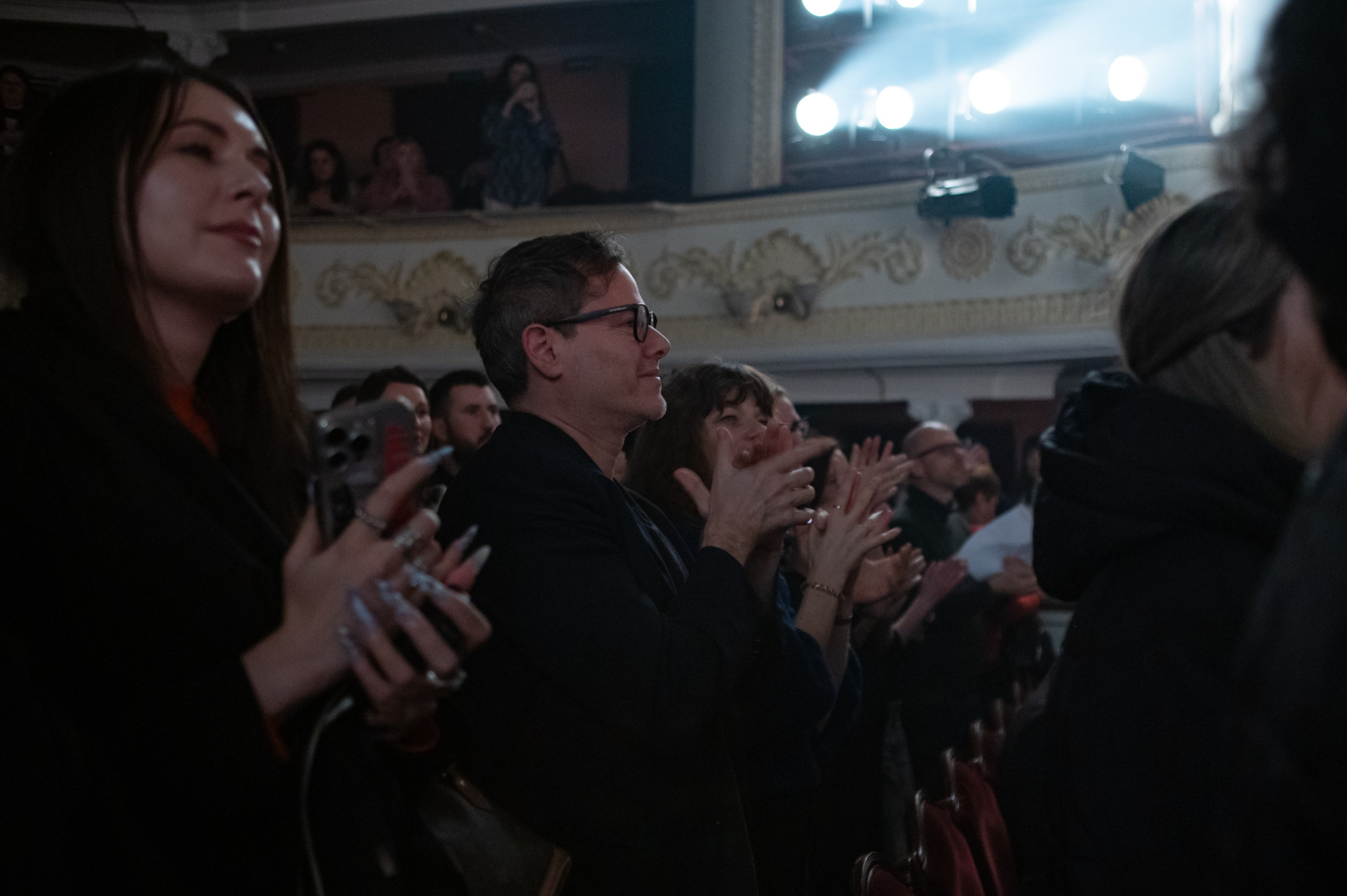
My trip took place on the occasion of the Ukrainian theater awards and an opera I am planning with several Ukrainian institutions. Hardly any of the plays presented – a completely crazy neo-opera entitled "Gaia 24," a magnificently performed "Macbeth," or a "Tosca" at the National Opera – could be played to the end. Air raid sirens are almost as certain as the intermission bell in Kyiv after nightfall. Nevertheless, all the plays were sold out, more so than in any other country I have visited in recent years. Theater tickets are so sought after in Kyiv that they are traded on the black market.
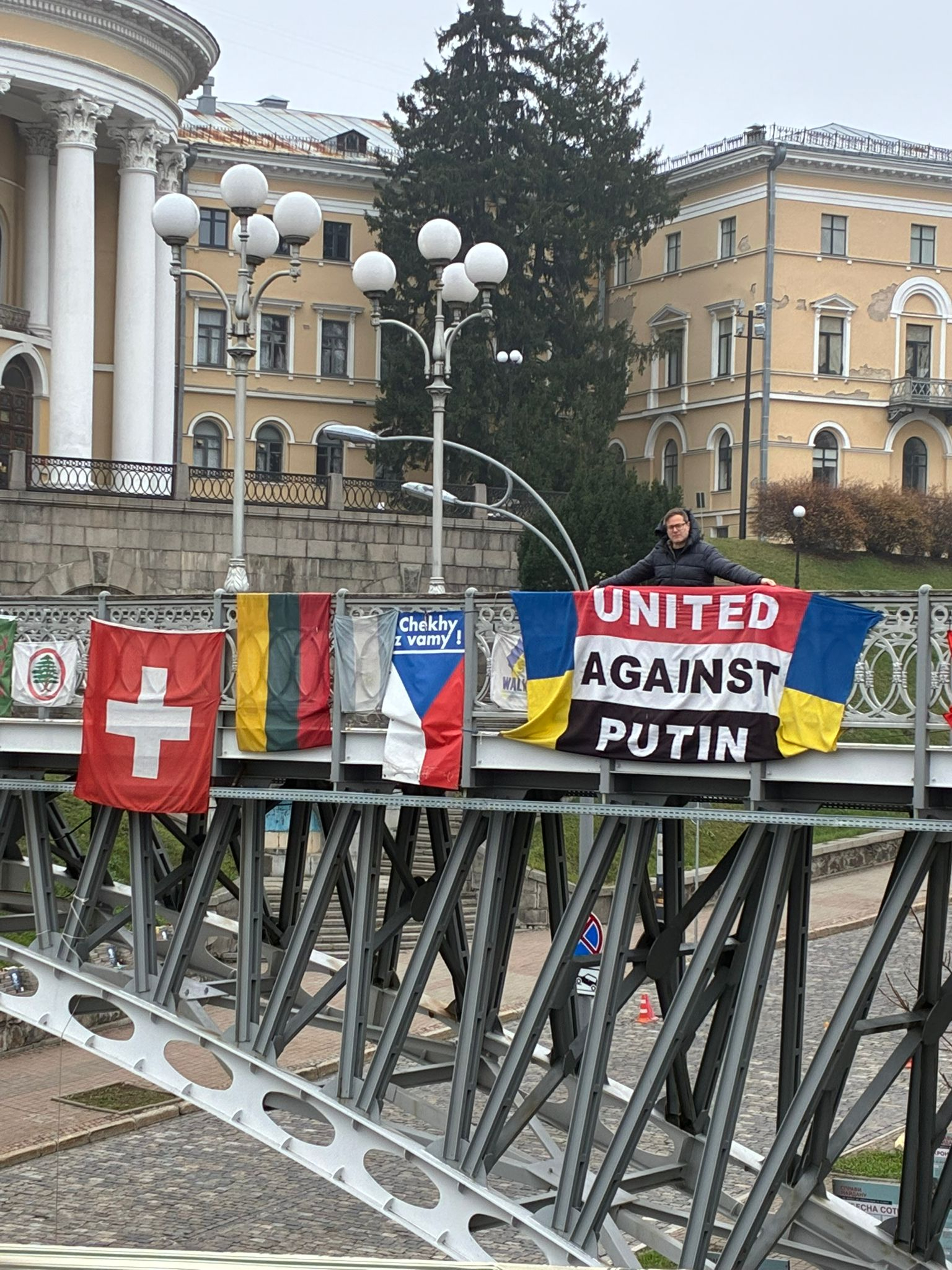
It is impossible not to admire the Ukrainians for their composure and courage in the face of Russian aggression – and growing European indifference. As far as Kyiv is concerned, the rule that I have noticed in many crisis areas also applies here: when terror becomes part of everyday life, an almost solemn celebration of normality prevails. Kyiv is surprisingly lively: a beautiful metropolis overflowing with churches, theaters, and restaurants. And as for Trump's completely unrealistic and historically oblivious peace plan: Ukrainians take it about as seriously as they once took the announcements of the Soviet rulers. It is a free and proud people who, even in the midst of a brutal war, continue to fight for democracy and take to the streets against the corruption of their elites – the best sign that Ukraine's independence has not been bought at the price of internal conformity.
The theater in Kyiv is not one that engages in one-sided propaganda. Why should it? It is political because of its necessity: because it takes place and is not banned, as in all the cities already occupied by Russia. But the extent to which the rejection of everything Russian has become entrenched is evident in the debates that take place alongside the plays. In one of them, I discuss with Olena Apchel, who once curated the Berlin Theater Meeting (Berliner Theatertreffen) for a short time before going to the Ukrainian front as a soldier. Olena's mother was murdered by Russians, her village destroyed. A soldier relieved himself on her parents' clothes and left insults on the wall of the house with his own shit.
It is indeed difficult to understand why Russia's colonial war of annihilation against Ukraine has not led to a clear political and military response in Western Europe. Europe understandably wants the war to end – but fails to understand that this means nothing less than selling out Ukraine and the European idea itself. For all serious geopolitical analyses make one thing clear: if the EU and NATO accept the peace plan, which means ethnic cleansing in the ceded territories, as in the case of Olena's family, then they are not only selling Ukraine's sovereignty and the lives of hundreds of thousands of Ukrainians, but also peace in Europe. "An appeaser is one who feeds a crocodile, hoping it will eat him last," as Churchill once said when England wanted to come to terms with Hitler after the Wehrmacht's victory over Poland – shortly before it was attacked itself.But who is this "Russia"? 80 percent of people in Russia support the war. It is difficult for me, who worked intensively in Moscow's dissident scene until my expulsion in 2013, to acknowledge this: the problem is not Moscow's "managed democracy," but imperial Russia, which is deeply ingrained in the minds and souls of the people – ultimately all people, in Moscow as well as throughout Europe.
One evening, I am a guest of the artist Nikita Kadan, who represented Ukraine at the Venice Biennale. His studio is located high up in a prefabricated building on the arterial road leading to Poland. At night, you can see the explosions of drones and missiles through the large windows. Nikita can only laugh at the veneration of "dissident" Russian artists and politicians – many of whom have fled to Paris, Vienna, Berlin, Brussels, or Stockholm in the last 15 years and were already my friends in Moscow: "What have they actually done against Putin?" He adds: "European faith in the liberalization of Russia has opened the way for Putin more than once and will most likely open it again and again." This sentence is often heard in Kyiv these days.
I was surprised by the fundamental delegitimization of Russian culture among my Ukrainian friends. One of the public panels I participate in turns into a kind of tribunal, where my collaboration with curators and artists who have fled Russia is denounced as a kind of collaborationism. "If they want to come to Ukraine and fight alongside us, they are very welcome," says Olena. It is not dogged, provincial state cultural warriors, but art college students, feminists, networked curators – actually the usual suspects when it comes to international solidarity across all cultural boundaries – who have broken with "Russia."
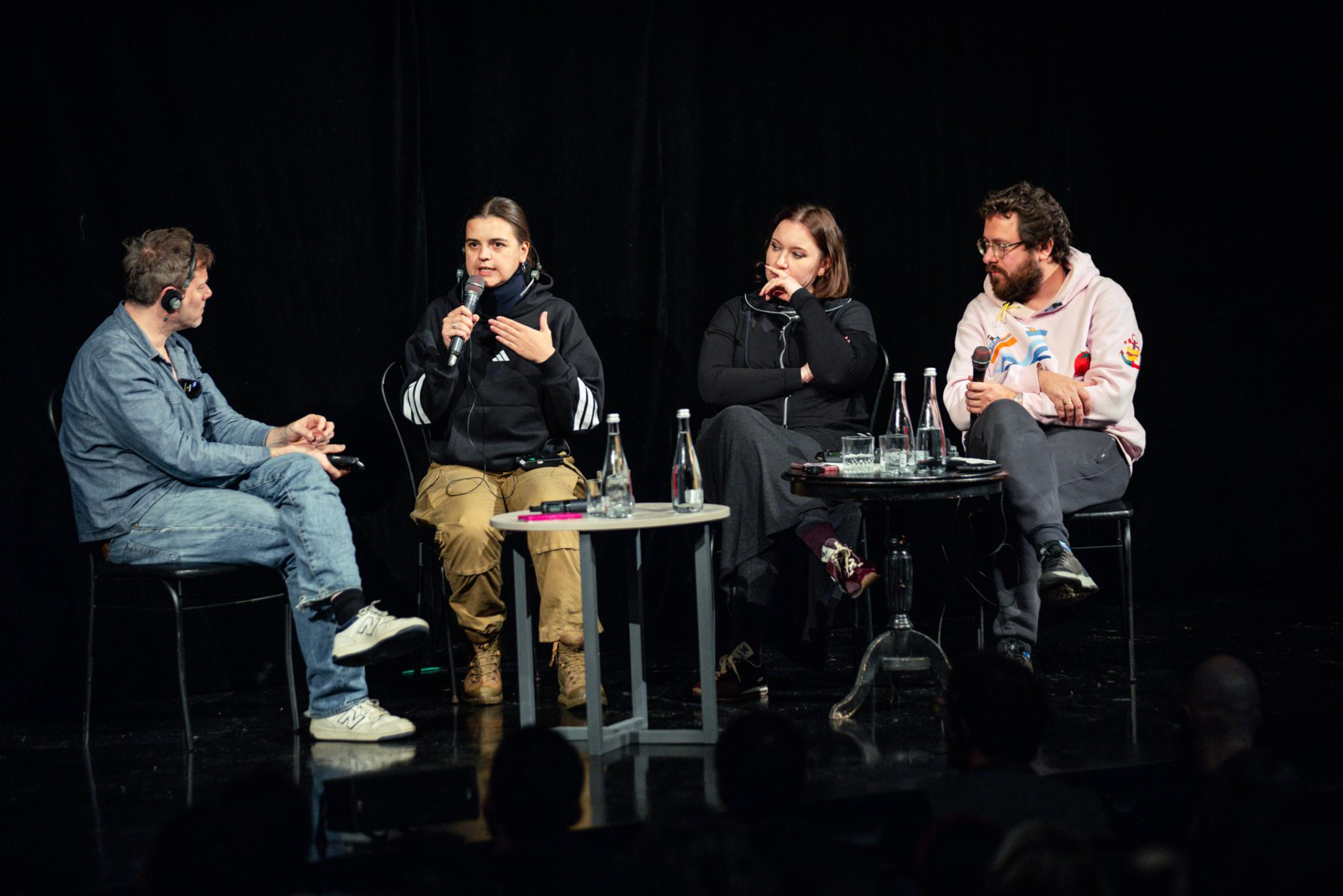
During a lecture by opera composer Illia Razumeiko, one of Illia's colleagues, actress Marichka Shtyrbulova, talks about her relationship with Russia: "The so-called 'brotherhood' between our peoples has always been a pretext for suppressing Ukrainian culture. That's why a statement from the writer Sasha Dovzhyk impressed me deeply: Russian is my mother tongue, and liberation means tearing it out of my throat." Until the war is over, Illia's motto is: "It is impossible for me to love a culture that wants to destroy me and everything I love." The street in front of the building where his lecture is taking place was renamed at the beginning of the war, from Pushkin Street to Chykalenko Street, after a famous Ukrainian philanthropist and patron of the arts. The fact that probably no reader of these lines has ever heard the name is another example of how effective cultural imperialism is.
On the morning before my departure, I visit the veterans' theater. People with prosthetic limbs, with faces bombed and burned away, perform a kind of ironic Aeneid: a story of the impossible return home from war, about the nervousness and uncertainty of those arriving. "Brothers in arms became brothers in arts," one jokes.
As with all my travels, it becomes clear to me that analyzing a conflict from a distance is one thing. Actually being there, amid all the contradictions, is something completely different. Where does indifference end and solidarity begin? What should I do with my love for that other Russia, which has accompanied me since my childhood, from Pushkin to Chekhov? One thing is clear: anyone expecting absolution for know-it-all attitudes and appeasement at a time of ethnic war of extermination will certainly not find it in Kyiv. "We don't need pity," says one of the veterans as we say goodbye, "but real understanding. And above all, support."
Milo Rau, artistic director of the Vienna Festival, worked in Moscow until 2013 and was expelled from Russia as a result of the "Moscow Trials," a project dedicated to the trial against Pussy Riot in Russia. Since then, he has not been granted a visa for the Russian Federation. Now his Resistance Now! tour has taken him to Kyiv.
Latest news


 more news