Ukraine's foreign minister outlines ways EU can tighten economic pressure on Russia without unanimity
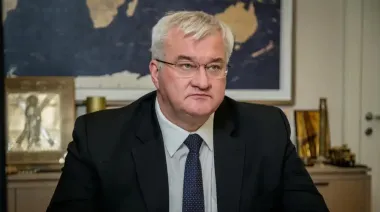
Ukraine's Foreign Minister Andrii Sybiha has said that the European Union and other partner states of Ukraine have not exhausted the tools for exerting economic pressure on Russia, and some decisions do not require unanimity.
Source: Andrii Sybiha in Brussels in a comment to European Pravda
Details: Sybiha, who has taken part in the NATO-Ukraine Council meeting on the sidelines of the Alliance's ministerial meeting, has said that part of the Council's work has focused on ways to increase pressure on Russia, as these are "steps that can bring a just peace closer".
Among other things, he stressed the need to synchronise sanctions pressure across different countries.
Quote: "It is important that we are all in the same sanctions space: Japan, Canada, New Zealand, Australia, the United Kingdom and the United States. As things stand, some countries have sanctioned around 600 tankers from Russia's so-called shadow fleet, while others – only about 150. This means there are gaps the Russian aggressor is exploiting."
More details: Sybiha also gave an assessment of the state of the Russian economy under sanctions.
Quote: "Our assessment is that next year, the Russian economy will be in stagnation before moving into recession. That is why it is necessary to increase this pressure with new sanctions packages and with [customs] tariffs."
More details: Sybiha said that tariff pressure is an instrument the European Union has not yet used, even though it would have an economic impact, as imports of Russian goods by some EU countries are still ongoing, based on his information.
Quote: "The application of tariffs or tariff policies that will restrict such trade flows does not require unanimity in the EU. So it is important that we also use this instrument."
More details: Sanctions decisions, by contrast, require significant effort, as they are often blocked or delayed by Hungary.
Sybiha did not name any country in connection with the idea of tariff pressure and also avoided mentioning Hungary in the context of unanimity, but has stressed that "a number of countries support this".
He also underlined the need to find a way to use frozen Russian assets to finance Ukraine's needs.
Background:
- It has been reported earlier that the EU will add Russia to its blacklist for money laundering.
- Meanwhile, Hungary is planning to challenge in court the ban on importing energy carriers from Russia.
- A decision to ban imports of oil, gas and coal from Russia is to be taken in the near future, as the EU still pays Russia €1.5 billion a month for them.
Support Ukrainska Pravda on Patreon !
Latest news



 more news